

When it comes to keeping your dog cool, a summer shave might be more harmful than helpful.
When dogs are uncomfortable in the heat, it shows up in their behavior before it shows up as a medical emergency. Restlessness, panting at rest, reluctance to walk, irritability, and reduced tolerance for handling are all signs of a dog running hot. As someone working in dog behavior, I see heat stress feed into reactivity and anxiety all the time.
As a dog guardian in sunny Singapore, you might be tempted to shave your furry friend to help them beat that heat. After all, if shedding layers makes us humans more comfortable, the same logic must apply to our canine companions, right?
 Well, not quite.
Let’s get into how you can really help them out.
How dogs regulate their temperature
Dogs don’t sweat all over their bodies like humans do. Instead, they have a few key ways to regulate their body temperature. I’ll need to take you to grade 7 physics for this section:
- Panting: This is the primary way dogs cool themselves down. When a dog pants, the moisture from their tongue, mouth, and respiratory tract evaporates, which helps lower their body temperature. The rapid breathing motion also helps circulate cooler air throughout their body1.
- Blood Vessel Dilation: When a dog’s core temperature rises, their blood vessels expand (dilate) to bring more heat to the skin’s surface. This allows the heat to be released into the air through radiation (heat radiating out). This works best when the air around them is cooler than their body. Since heat moves from warmer to cooler areas, the smaller that temperature difference becomes, the less effective this cooling method is1.
- Airflow/Convection: As air moves over their bodies it carries off the warmer air closer to their skin A dog in front of a fan or in a breeze cools by convection. A dog in still air doesn’t get to use this method as much1.
- Laying on cool surfaces: Laying on tile floors or shaded ground helps draw heat out of the body onto the cool surfaces much as the earlier example as heat moves from hot to cooler areas. So the skin heats up and as they lay on cooler surfaces they can dispel some of that heat onto the surface – this is why even when we sit on a spot, when we move its warmer1.
- Sweat Glands: Dogs do have some sweat glands, but they are mainly located on their paw pads. However, this sweating plays a relatively minor role in a dog’s overall cooling process1.
 On top of this, their coat plays a part too.
A dog’s fur doesn’t just “trap heat.” It acts more like a buffer that slows how heat moves between their body and the environment2, 5. That means it can reduce heat escaping from the body, but it can also reduce heat coming in from the outside. So, it’s a double-edged sword in a way.
The Part That Gets Missed in Singapore
In Singapore, the bigger issue isn’t the coat. It’s the humidity.
Since panting is their primary method to regulate how hot they feel and that relies on evaporation. When the air is already full of moisture, that process becomes less effective. That’s why dogs here tend to struggle in the heat, even when they’re not doing much.
 Secondly, as temperatures rise in the middle of the day, the difference between your dog’s skin temperature and the air around them might be less which would end up making it harder for the heat transfer from their skin to the air around them happen.
So, while shaving changes the coat, it doesn’t fix the main problem your dog is dealing with – how to get rid of the heat via evaporation and heat transfer to the air around them.
What the Research Actually Shows (and How It Gets Misread)
This is where things tend to get confusing.
You’ll often hear statements on both ends of the spectrum like:
- “Double-coated dogs stay cooler because the coat acts like insulation and traps cooler air by the skin’ or
- “Shaving helps prevent overheating by allowing the hot air to radiate out of the skin faster”
But when you look a little closer, the research doesn’t support either of those conclusions as clearly as people think.
 For example, some studies used heat cameras to look at the surface temperature of dogs. These sometimes showed the air around short-coated dogs appearing warmer (implying they were radiating heat out), while long-coated dogs were cooler on the outside (implying either that they weren’t as warm or maybe not as able to radiate heat out). However, both had similar core temperatures4.
That sounds somewhat convincing at first glance, but firstly the study is measuring the surface air surrounding the dogs and their core body temperature. It’s like looking at how warm the air feels around someone and confirming their internal temperature is normal, but missing whether they’re actually struggling in the heat.
People on the other side of the camp look at other studies looking at heat-related illness in dogs3 and tend to claim that some of the dogs reported for heatstroke have longer or double coats. However, upon closer look, those studies point more strongly to factors like:
- breathing ability (especially in flat-faced breeds)
- how much exercise the dog is doing in the heat
- overall body structure and size
Some of those dogs have thick coats. Some don’t. The data isn’t clear on coat as the main factor. In fact the data isn’t even broken down by coat type independently to be able to make any conclusions on it.
What this tells us is that the coat is part of the picture, but it isn’t THE deciding factor in how well a dog copes with heat.
What Actually Helps Your Dog Stay Cool
This is where your effort makes the biggest difference. Instead of focusing on the coat, it helps to look at your dog’s environment and daily routine.
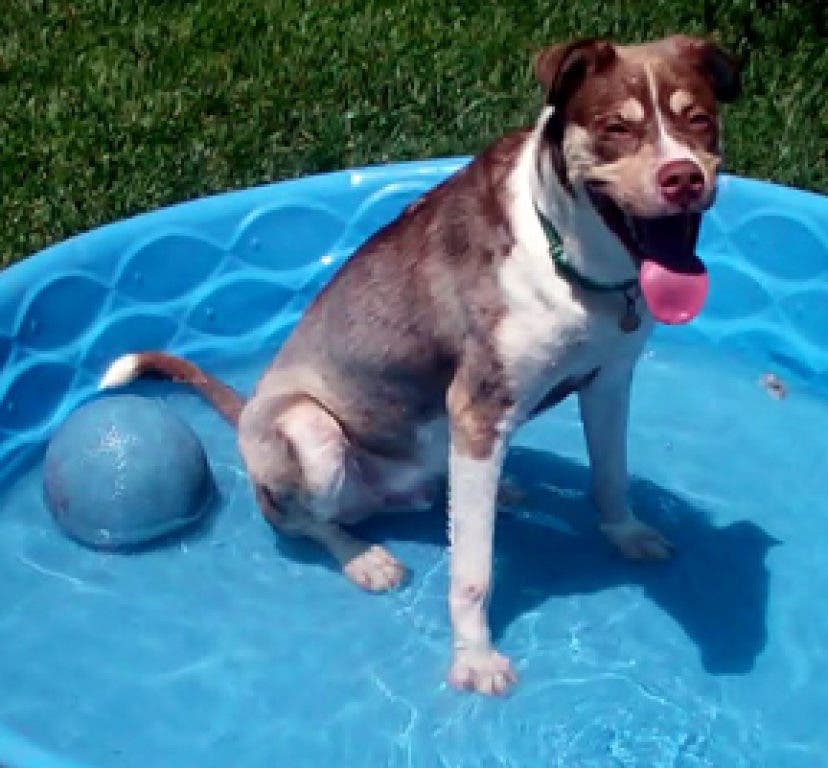 There is consensus across the board that the below interventions will have a positive impact on how comfortable your dog will feel in the heat.
- Access to shade – to shield them from direct heat
- Plenty of fresh water – to prevent dehydration
- Cool resting surfaces like tiles or cooling mats – to allow them to cool down
- Airflow from fans – to remove heat close to their skin’s surface
- Air conditioning where possible so that they’re better able to transfer heat from their skin to the air around them
- Walking earlier in the morning or later at night
- Avoiding hot pavement
In Singapore, these tend to have a much bigger impact than whether the coat is shaved or not.
Does Shaving Really Make a Difference?
So, does shaving make a difference? Yes, but not in the way you think. Shaving your dog’s fur can lead to some serious risks:
- Sunburn: Just like humans, dogs can get sunburned. Without their protective coat, their skin is exposed to harmful UV rays. Dogs have much thinner skin layers than us humans7 and are even MORE sensitive to the sun than us. Shaving increases the risk of them getting a nasty sunburn that makes them even more uncomfortable in the heat. So if you do shave them, you need to manage their time in the sun actively.

- Direct Heat: It sounds counterintuitive, but removing the fur could actually make your dog heat up faster. Remember when I said the fur/coat works both ways2,5 – keeps heat from getting out, but also from getting in. Without the protective layer of fur the surrounding warm air can heat up your dog faster. The fur slows down the transfer of heat from the environment to their skin.
- Hair Growth Issues: Shaving can also cause long-term damage to your dog’s coat. In some cases, the hair doesn’t grow back properly6, or it can grow back unevenly. This is particularly problematic for double-coated breeds such as Golden Retrievers, Huskies, Shiba Inus, where the undercoat may come back thicker and denser, making it even harder for your dog to stay cool.
 All of these can have an exacerbating effect on your dog’s behavior ultimately, because let’s face it, if I’m uncomfortable from a sunburn or overheated, I am definitely going to be more snappy and snarky to even the slightest annoyance, the same goes for your dog. Physical comfort is one piece of your dog’s overall needs. This free guide covers everything that goes into keeping a dog with big feelings settled and coping well.
So… Should You Shave Your Dog? What Singapore Guardians Need to Know
Based on current research, there just isn’t enough strong evidence showing that shaving improves overall temperature regulation or comfort.
More importantly, it doesn’t address the main issue in Singapore, which is humidity affecting how well panting works.
Shaving changes the coat.
It doesn’t change the environment your dog is in.
If You Want to Adjust their Coat
 A more practical starting point would be de-shedding and brushing regularly to prevent matting.
This means:
- Removing loose undercoat (if double coated)
- Keeping the outer coat intact and in good condition
- Allowing better airflow through the fur
There isn’t direct research proving this improves temperature regulation, but it aligns with how coat density affects heat movement.²
Putting It Together
Across what we know so far:
- The environment has the biggest influence. You’re going to have to manage this whether you shave them or not.
- The coat affects heat movement, but it isn’t the main issue – the surrounding air temperature, humidity and airflow is.
- Shaving isn’t a proven cooling solution at least across what we currently see in science-based literature.
- Both shaving vs not shaving come with trade-offs that need to be managed
- De-shedding and preventing mats is a lower-risk adjustment
What I’d Recommend in Practice
Start with the environment.
Make adjustments to how your dog lives day-to-day and watch how they respond.
If their coat is dense or sheds a lot or gets matted, de-shedding and regular brushing is a reasonable addition to your routine.
Only after that would trimming or shaving come into consideration, and only IF your dog is still clearly struggling.
Of course consider the dog in front of you. If your dog tends to trap a lot of moisture between their skin and their coat and ends up getting hot spots or rashes, then a shave might be one of of your first interventions vs the last.
A Final Thought
Dogs often show signs of discomfort before things become dangerous.
If your dog is restless, constantly trying to cool down, or struggling to settle, something in their setup needs adjusting.
In most cases, it’s not just about the fur, it’s everything around them.
Conclusion
In the end, shaving your dog during Singapore’s more humid months might seem like a quick fix, but it’s just as likely to cause harm as do good. In general, unless your veterinarian or groomer specifically recommends it, it’s best to avoid the temptation to shave your dog without first considering all the pros and cons.
 Focus on other ways to keep them cool, like regular de-shedding and brushing to allow for smoother airflow through their coat, providing plenty of shade, water, and opportunities to swim. If you’re concerned about keeping your dog comfortable in the heat, consider other cooling methods like AC, fans, doggy cooling mats and avoiding walks during the peak heat of the day.
Sources
- Cunningham, J. G. (2013). Cunningham’s Textbook of Veterinary Physiology (5th ed.). Elsevier.
- Jimenez et al. (2023). Effect of different masses, ages, and coats on the thermoregulation of dogs before and after exercise across different seasons. Veterinary Research Communications.
- Beard et al. (2024). Epidemiology of heat-related illness in dogs under UK emergency veterinary care in 2022. Veterinary Record.
- Kwon and Brundage (2019). Quantifying body surface temperature differences in canine coat types using infrared thermography. Journal of Thermal Biology.
- do Nascimento et al. (2025). Heat stress in domestic dogs: morphological and environmental risk factors for dog welfare in a warming world. Frontiers in Animal Science.
- Koch et al. Canine Post-clipping Alopecia. Small and Large Animal Dermatology Handbook, Vol. 2, University of Minnesota.
- Scott, D. W., Miller, W. H., & Griffin, C. E. (2001). Muller and Kirk’s Small Animal Dermatology (6th ed.). W.B. Saunders.