

Your dog bit you.
You’ve dealt with the wound, visited the doctor and now you’re back home wondering how on earth you’re supposed to manage day to day activities with a dog who just bit you.
They still need to be fed and taken for a walk and they still share the same home. And if you’re the primary caregiver, there’s probably no one else to take over.
 You also might be feeling a little scared of your dog now which can be a strange feeling when this is the same dog you’ve loved and cared for all these years.
This isn’t an easy situation, so let’s talk about how to manage everyday life after your dog bites you, especially when the traditional advice of “separating them from the bitten person”, can’t be applied.
My Dog Bit Me: Is It Safe to Keep Caring for Them?
Before anything else, we need to consider what happened during the bite.
A dog who snapped when you accidently stepped on their tail is a very different situation from a dog who repeatedly bit or pursued you during an ordinary interaction.
The severity of the bite, whether there were warning signs, what triggered it and whether your dog continued attacking all affect how we assess risk.
If your dog has inflicted deep puncture wounds, bitten repeatedly, chased you, or you cannot safely meet their basic needs, please do not attempt routine handling without professional guidance. Call a professional today.
You’ll need a temporary care arrangement that keeps you both safe.
For a more comprehensive guide on what to do immediately after a bite please see with this page.
How to Care for Your Dog After They Bite You
I know you probably want things to go back to normal, but for now we are going to have to make a few changes. The goal is to reduce situations where your dog might feel threatened or uncomfortable while allowing you to meet their daily needs safely.
And because every bite happens under different circumstances, keep in mind the below are general precautions until a qualified behavior consultant has assessed your situation.
Feeding Your Dog After They’ve Bitten You
 If your dog has ever guarded food, growled when you approached during meals, or bitten around food, feeding time needs extra care.
We want to minimize stress and conflict in this situation.
- Prepare their meal while they’re safely behind a closed door or secure barrier
- Place their food down before allowing them access, using a set up that doesn’t require you to enter their space with food
- Leave them alone while they eat
- Wait until they’ve moved away and are safely separated before picking up the bowl
Avoid hand-feeding, taking things from their mouth, or using meals to test whether they’re ok with you for now.
Even if the bite had nothing to do with food, predictable feeding routines can help reduce unnecessary conflict.
Walking Your Dog After a Bite
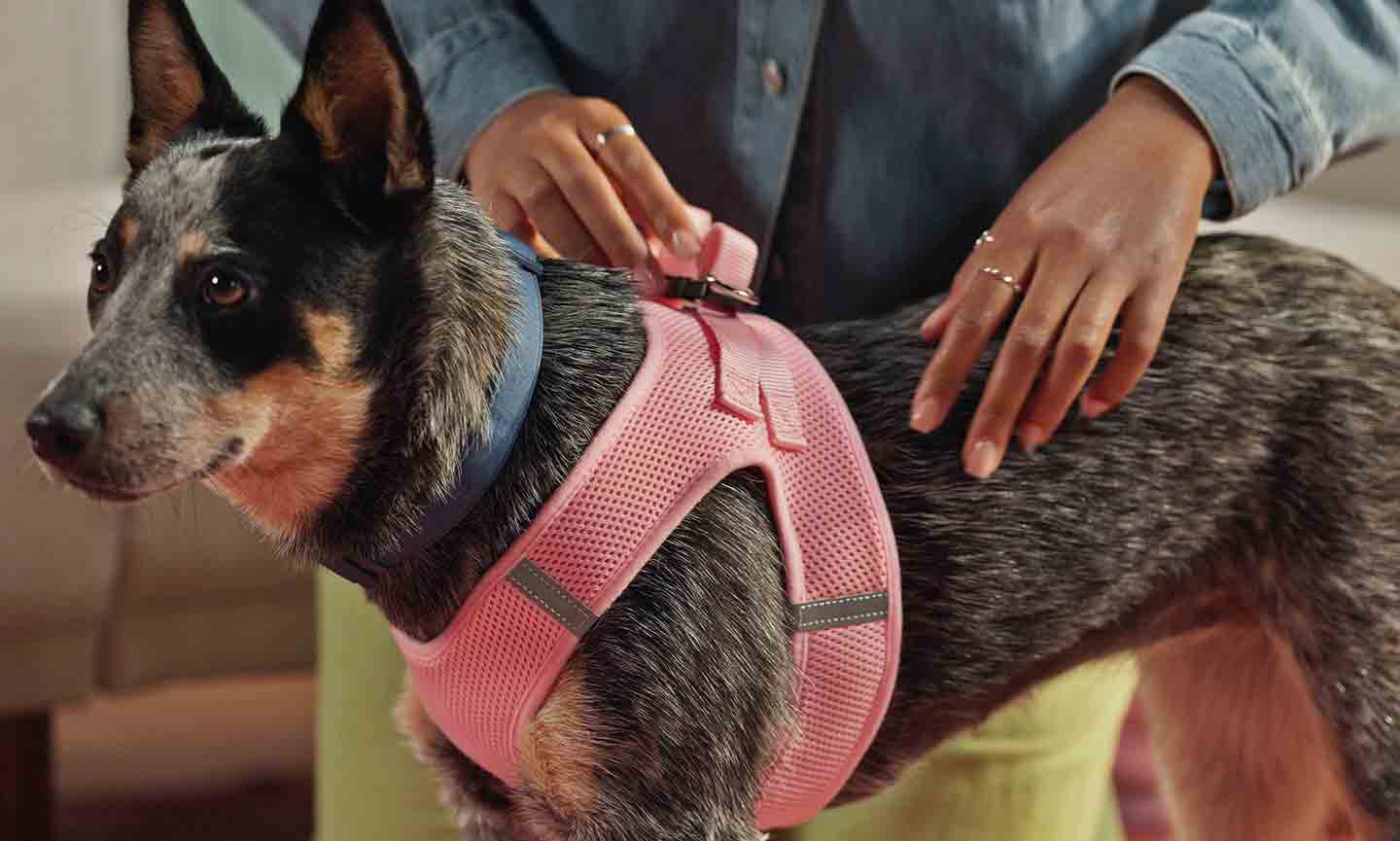 I want you to first consider whether you can safely attach their harness and leash and manage them if something unexpected happens.
If your dog bit you while you were attaching their leash or putting on their harness, or touching their collar, please do not repeat that interaction until you’ve received professional guidance.
If handling is safe and the bite wasn’t related to walking equipment then:
- Choose quieter walking times and routes. These will help in keeping stress levels low
- Avoid stopping to interact with unfamiliar dogs or people
- Keep walks short if your dog is stressed or easily overwhelmed, skip them for a few days
If you cannot safely leash or walk your dog, arrange for temporary help from someone qualified to manage the risk such as a professional dog walker. A pee pad or indoor toileting set up may be useful in some homes while you arrange a safer plan.
Sleeping Arrangements After a Dog Bite
 Your dog may have slept in your bedroom for years, or even shared your bed, but after a bite, I’d recommend temporarily changing that arrangement, especially if the incident involved resting, being touched while asleep or guarding a sleeping spot.
Set up a comfortable sleeping area in a separate room, with water and familiar bedding.
Ideally your dog should be able to settle there without feeling distressed If they aren’t comfortable sleeping separately, that’s something your consultant will need to help you plan for safely. Don’t force a sudden change that creates another confrontation, but you also don’t want to expose yourself to another bite incident risk.
Avoid physically moving your dog off the bed, or reaching towards them when they are resting. If they have a tendency of resting on your bed before you get there, keep the door closed during the day so that you avoid the situation of trying to get them off your bed before you get in.
Moving Around Your Home After a Dog Bite
This is probably the part most guardians underestimate the most.
Singapore living in HDB flats or condos involves situations where you and your dog will constantly cross paths in the hallway, the kitchen or the living room.
If your dog is sensitive to people approaching, being touched, or moving around them, those every day encounters can be come tricky.
So for now:
- Used closed doors, or securely installed baby gate to create separate areas
- Plan movements so you aren’t squeezing past your dog in narrow spaces
- Avoid stepping over them if they’re lying down
- Give them space when they’re resting or chewing
- Don’t grab them by the collar or physical nudge or push them out of your way. Invite them to move through strategic treat/food placement (so long as food is not a contentious item)
 One important thing about barriers such as baby gates: This only works if your dog cannot jump over it, push through it, or bite someone through it. For high-risk situations, a closed secure door may be more suitable.
If your dog is guarding a doorway or refusing to move, don’t try to push the situation further. Move away and use an alternate route, or work with a professional to get strategies on how to navigate that situation safely.
Petting and Spending Time With Your Dog After a Bite
I know this can be emotionally difficult. You might desperately want to cuddle your dog again, because you’re worried the relationship has changed, or you are still having a hard time believing that they meant it. Or maybe your dog comes up to you looking for affection and you feel guilty about hesitating.
For now, I’d avoid close physical contact until you have a clearer understanding of what triggered the bite.
You can still provide enrichment, allow your dog to explore their environment, and maintain familiar routines, without putting yourself within biting distance.
If you’re using food puzzles, or chews make sure you have a safe way (barriers, tethers) to provide and remove them, especially if resource guarding is a concern.
Please do not use affection as a way to check if your dog might bite again.
Telling Your Household and Vet About the Bite
 If you share a home with family members or have house help, brief them on the safety precautions so that everyone can stay safe. Often its helpers that spend the day with our dogs that are likely to repeat the unsafe handling without knowing the risk.
Make sure you book the Vet. Pain is a common factor in bites that happen during handling, so a full physical with pain assessment is critical. Let the clinic know your dog has bitten so they can plan the visit and ask if they have a quieter slot so its a bit less stressful for your dog.
Scared of Your Dog After a Bite: How to Rebuild Trust
Getting bitten by your own dog can really shake your confidence.
 Your nerves will probably show in your body. You might move more stiffly around your dog, or hover, or flinch when they walk up to you. Dogs are good at picking up on changes in how we move, so if your dog seems a little unsettled too, take it as a reaction to the tension in the house rather than a sign the bite is about to repeat.
Keep in mind your dog isn’t carrying the bite around the way you are. What they’ve most likely learnt is that a specific situation felt threatening, and biting made it stop. Trust will get rebuild by making daily life predictable enough that they don’t feel the need to use that escalation again.
- Make your routine predictable. Keep meals and walks at roughly the same times each day, and say the same word before you interact, like “Dinner time” before the bowl goes down. Predictability lowers stress because your dog can see what’s coming. Chose one cue for moments you approach your dog and use it every time.
- Give your dog choices. Let them decide whether to come to you for attention or pets or stay where they are. Having a choice gives a stressed dog a sense of control, much like knowing you can leave a party makes it easier to stay.
- Avoid unnecessary handling or grooming and get a qualified professional involved before trying to rebuild interactions that led to the bite
- Learn your dog’s early signals. Lip licks, freezing, a hard stare, are the quieter warnings that usually come before a bite. Spotting them early is how you’ll avoid future incidents. I’ve got a free guide here.
- Call a professional to help you and your dog get back on the same page
Two things help in practice: Keep your interactions short and predictable while you’re feeling shaky. The other is talking to someone about it. Being bitten by your own dog is a strange and lonely experience, and saying it out loud to a friend or a professional take some of the weight off.
Moving Forward After Your Dog Bites You
 Progress won’t be a straight line. You might have a week where everything feels normal and then a moment where your dog stiffens and your stomach drops. Those moments are useful too, because they show you where you need to slow down.
If you’re not sure what triggered the bite, or it seemed to come from nowhere, getting clarity on what’s driving the behavior is the first step. You can read more about how I work with dogs who are aggressive toward people and what that process looks like.
Sources
Horowitz, A. (2009). Disambiguating the “guilty look”: Salient prompts to a familiar dog behaviour. Behavioural Processes, 81(3), 447–452. https://doi.org/10.1016/j.beproc.2009.03.014