

When most people think about muzzle training, they picture a dog with serious behavior issues. Maybe a dog that bites or growls, or even one that’s been labeled “aggressive.”
But here’s the thing: every dog will likely need to wear a muzzle at some point in their life.
And unfortunately, that moment often arrives when they’re already having a really bad day. They’re injured, in pain and frightened, sitting in a veterinary clinic surrounded by unfamiliar smells, strange people, and procedures they don’t understand.
This is exactly why I believe every dog should be muzzle trained, regardless of whether they have ever displayed aggressive behavior.
Muzzle Training Isn’t Just for Aggressive Dogs
One of the biggest reasons guardians avoid muzzle training is stigma. People worry that a muzzle makes their dog look dangerous.
 A muzzle is closer to a seatbelt. You don’t wear a seatbelt because you’re a bad driver. You wear it because things can go wrong in the blink of an eye and you’d rather be prepared.
Here’s what catches a lot of guardians off guard: the friendliest dog alive will bite if they hurt enough. Pain drops a dog’s bite threshold, so a dog who has never so much as growled can snap at the vet pressing on an injury, or at you cleaning a wound after an accident. It’s a normal reaction from an animal who can’t tell you where it hurts.
So, muzzle training really works for two categories:
Dogs with known behavior concerns: If your dog reacts to handling, strangers, or other dogs, a muzzle keeps everyone safe while you do the real behavior work underneath. It gives you room to train instead of bracing for the next incident.
Dogs with no issues at all: It allows people to help your dog safely when they need it most. A gentle dog in pain is still a dog in pain. Teaching the muzzle as a normal, even good, object means that one day when it counts, it’s one less thing tipping your dog over the edge.
What a Muzzle Actually Does, and What It Doesn’t
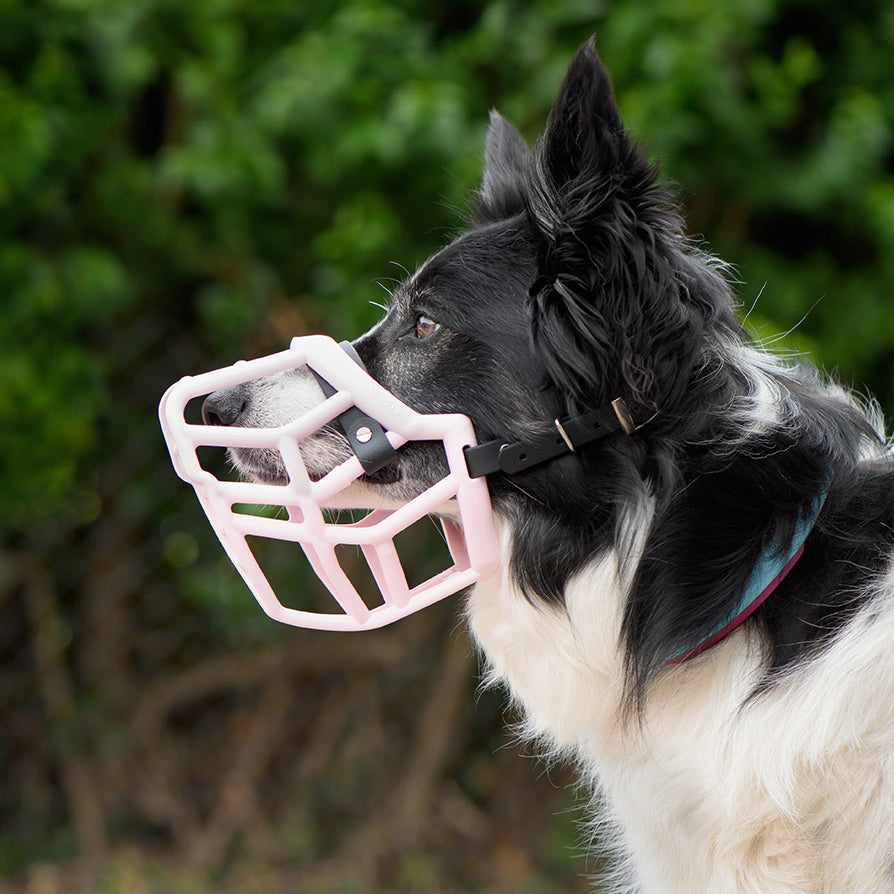
A muzzle stops a bite from landing. That is the entire job.
Many people see a muzzle as a restriction. In reality, it often creates opportunities.
- A dog who is comfortable in a muzzle can:
- Get through a vet or grooming appointment without it turning into a wrestling match.
- Keep progressing on a training plan with a safety net in place, so a slip-up doesn’t become an incident.
- Handle a crowded HDB lift lobby or busy void deck without you bracing for trouble the whole way out.
- Travel, board, or be handled by a stranger in a pinch with far less risk to everyone involved.
It won’t calm your dog down or fix what’s upsetting them, and it isn’t a pass to push your dog into a situation they can’t cope with and assume the gear will sort it out. Used that way, you’ll both come out worse.
If a muzzle is part of how you’re managing your dog’s reactions to people, it’s holding the line while the real work happens. That work starts with understanding what’s actually driving the behavior. You can read more about how I work with dogs who are aggressive toward people here.
When Your Dog Will Need a Muzzle in Singapore
You might be sure your dog will never need one. Here’s how often it actually comes up.
 At the vet, especially when something’s wrong: Clinics often muzzle as standard for anything that might hurt, and Singapore vet appointments move quickly, so there’s rarely time to introduce it gently on the spot. Train it at home so the clinic isn’t your dog’s first experience of it. If vet trips are already a battle, our guide to making vet visits less stressful walks through prep and timing.
- During
 grooming and nail trims: Plenty of dogs are fine until a clipper catches a sensitive paw or a mat gets tugged. A muzzle keeps the groomer safe, keeps the session short, and stops a reactive dog being turned away.
 - If you have a Specified breed: Rottweilers, German Shepherds, Dobermans, Bull Terriers and their crosses are legally required to be muzzled and leashed in public here.[1] Enforcement on the ground tends to be light, but the law is real, so it’s worth having the muzzle sorted either way.
- In an emergency or accident: A dog hit by a vehicle, caught in a door, or burned will often bite the person trying to help, including you. A dog who accepts a muzzle calmly can be the difference between getting help fast and a frightening struggle.
Muzzle Training Done Right
 A muzzle only helps if your dog actually feels fine wearing it. Putting one on and watching your dog “tolerate” it teaches them the muzzle means being trapped, which makes every future use harder.
A properly fitted, positively conditioned muzzle can allow behavior modification and veterinary care to happen more safely.
The fix is to go slow and pair the muzzle with food, so it predicts good things instead of restraint. A survey of nearly 1,900 guardians found that using food during training, and taking the time to introduce the muzzle properly, made a clear difference to how well dogs coped with wearing one.[2]
The goal is a dog who happily puts their nose into the muzzle because they have a long history of positive experiences with it.
I walk through the full step-by-step in this video, so I won’t repeat all of it here. If you get partway in and hit a wall, my free muzzle training troubleshooting guide covers the spots dogs most commonly get stuck and how to work past them. Y
Choosing the Right Muzzle: Basket vs Fabric
This one is easy to get wrong, and the stakes are higher in Singapore because of the heat.
Dogs don’t sweat to cool down. They pant. That open-mouth panting is their main cooling system, and in our climate it’s working overtime most of the day.
Basket muzzles suit almost everyone: They look more intimidating, but they let your dog pant fully, drink, and take treats through the gaps. That last part is what makes training possible, since you’ll be feeding through it constantly. Pick a basket muzzle and fit it so your dog can open their mouth comfortably.
Fabric or grooming muzzles hold the mouth shut: They’re built for very brief procedures, a minute or two at most. A dog who can’t pant overheats fast in our weather, which makes these risky. Keep them for short moments only, and never on an unattended or warm dog.
Fit comes before everything. Too tight and it rubs and hurts. Too loose and it slips off or pinches. Most brands publish a measuring guide, and taking the time to measure your dog before buying one is well worth it. Take it from someone who has wasted hundreds of dollars on countless ill-fitting muzzles before taking the time to measure and find ‘the one’.